Types of Window Grills: A Practical Guide to Materials, Sizes and Care
12 designs Materials guide Updated 9 Oct 2026
There are five main types of window grills in Indian homes: fixed, openable, box, sliding and collapsible. Each one suits a different window, floor and budget. This guide explains them in plain words, then covers metals, bar sizes, safe spacing, rust care and how to brief your welder.
Read it before you call the fabricator. Most problems with grills, such as rust at the wall, sagging shutters or bars that a child can slip through, come from choices made on day one. Once you know the type and size you want, browse the window grill design gallery for patterns.
Fixed and Openable Window Grills
The first choice is simple: will the grill stay shut forever, or does part of it need to open? Fixed grills are stronger. Openable ones are safer in a fire.
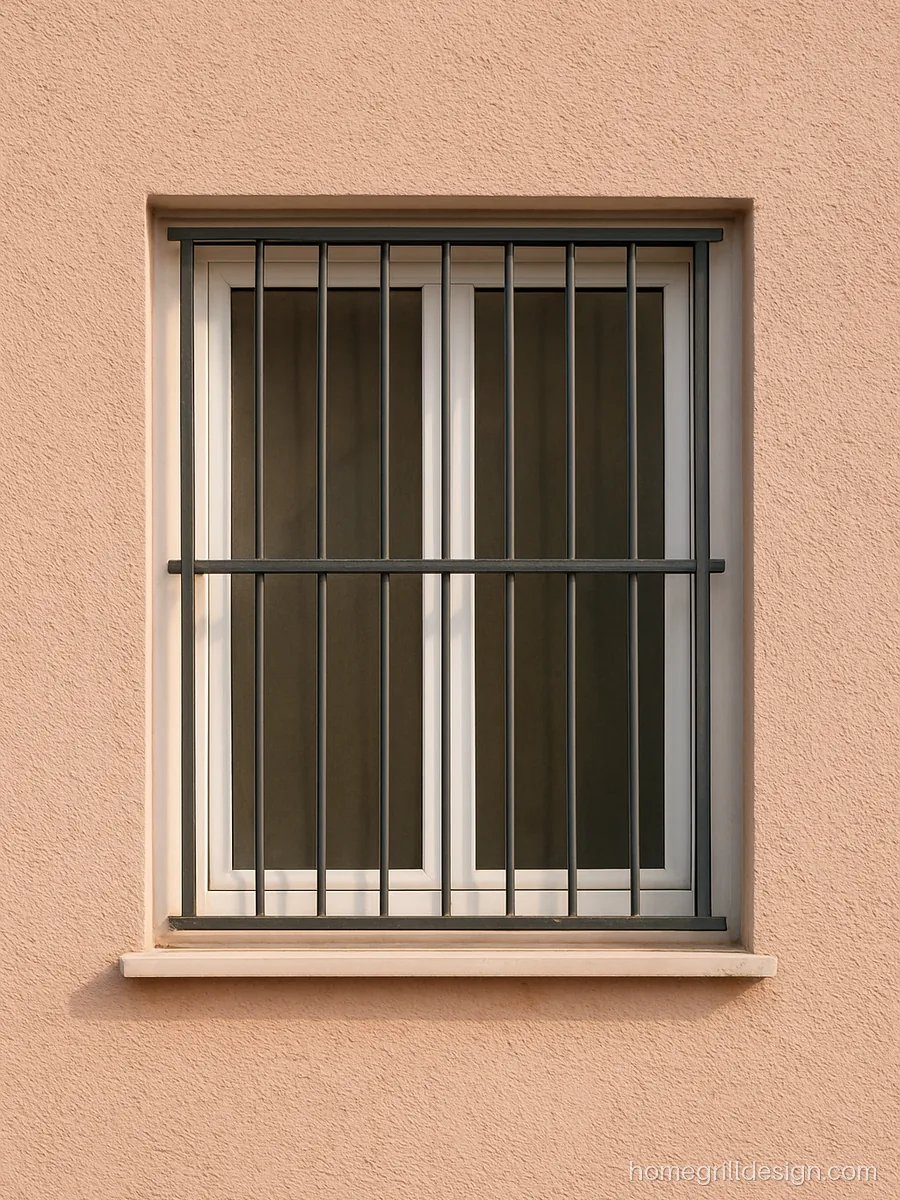
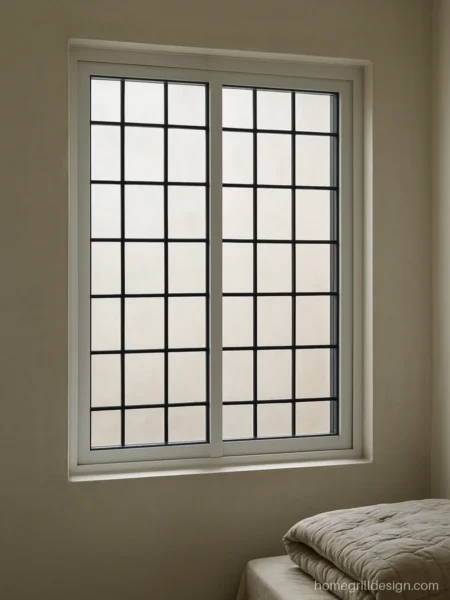
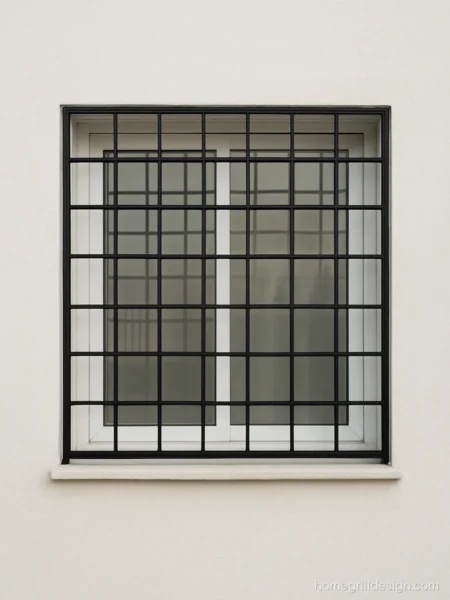
A fixed grill is welded to holdfasts and never opens. It is the most common of all the types of window grills and the strongest.
- MaterialMS 12 mm square bar
- StyleFixed vertical bars
- SuitsGround floor windows
Fabricator’s tip Set holdfasts before plastering and let the mortar cure a week before painting near them.
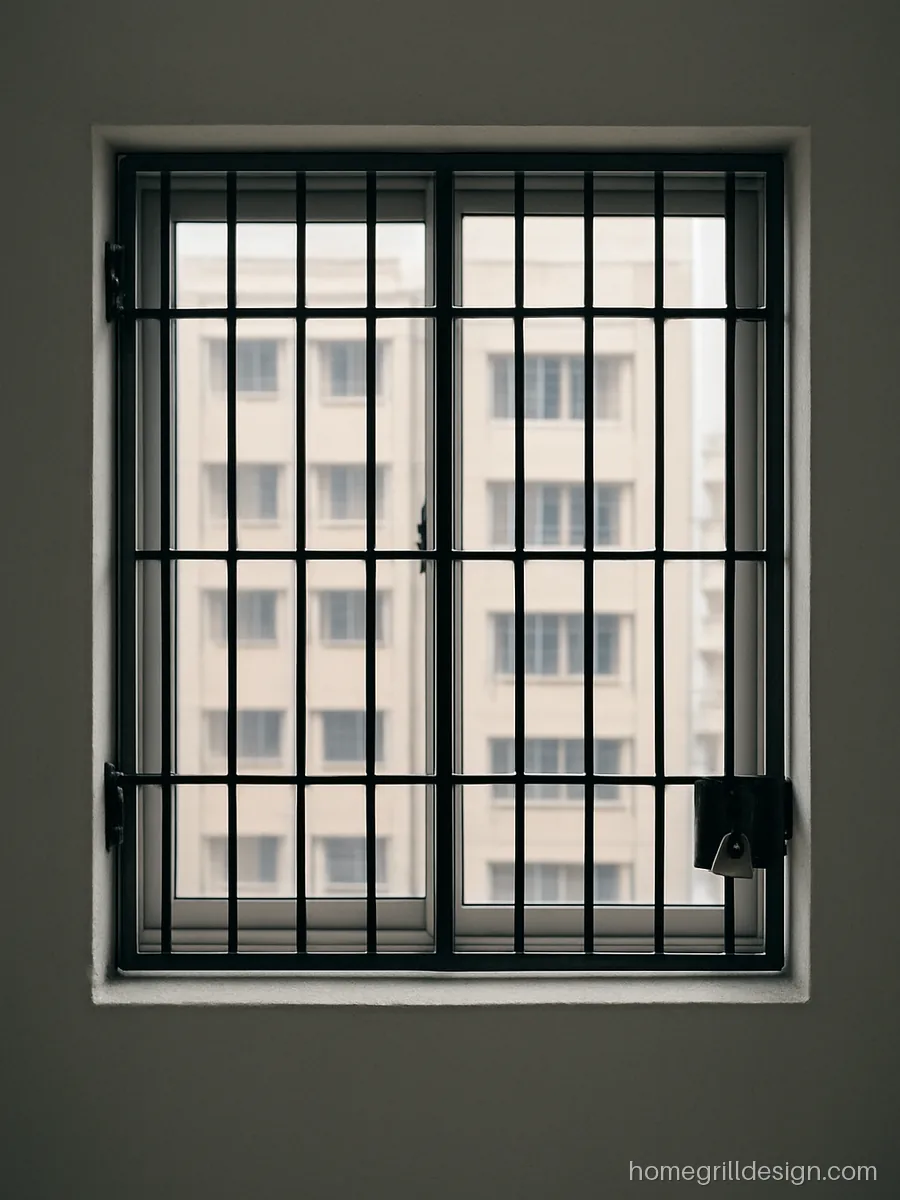
One hinged shutter swings open and closes with a key lock. Every flat bedroom should have one so the family can get out in a fire.
- MaterialMS 14 mm square bar
- StyleHinged shutter grill
- SuitsFlat bedrooms
Fabricator’s tip Hang the key on a hook beside the window, never in a drawer, so anyone can find it fast.
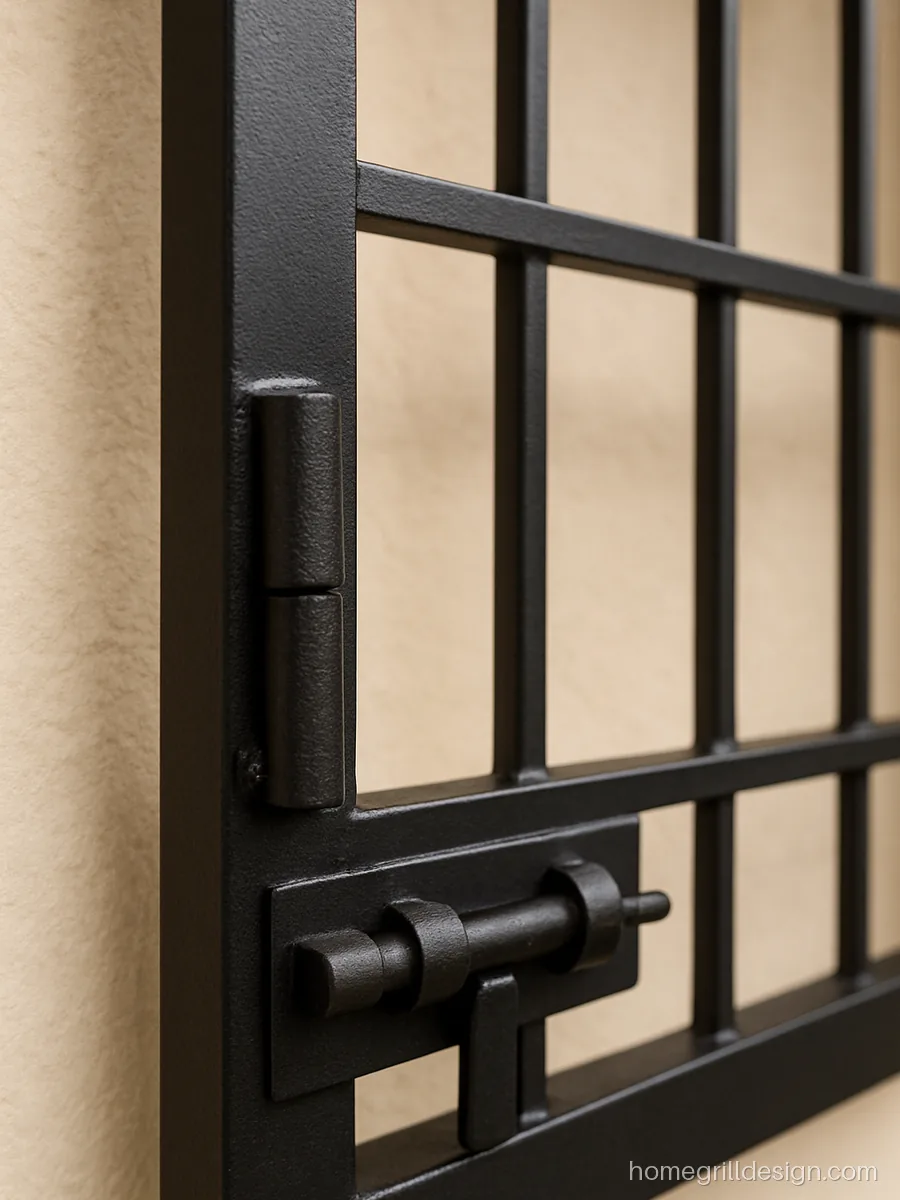
Use heavy pin hinges and a tower bolt with a lock. Light door hinges wear out and sag under a steel shutter.
- MaterialMS flat 40 x 6 mm
- StyleHinge and bolt detail
- SuitsAny openable grill
Fabricator’s tip Grease the hinge pins twice a year and keep the lock covered from direct rain.
Box, Sliding and Collapsible Grills
These three types of grills for windows solve space problems. A box gives a ledge, a sliding grill clears the opening, and a collapsible grill folds away.
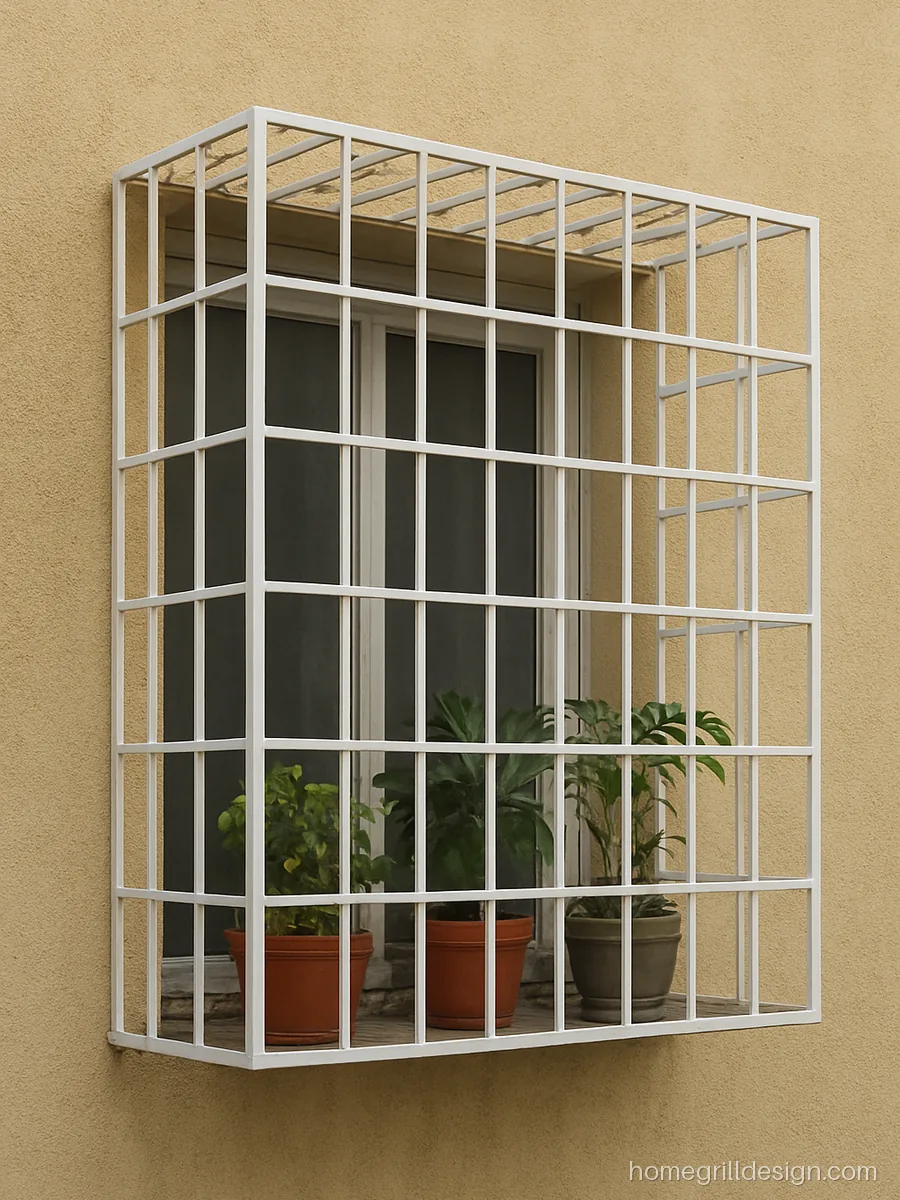
A box grill stands out from the wall by 300 to 450 mm. It gives a ledge for plants and room to open outward shutters.
- MaterialMS 16 mm square bar
- StyleProjecting box
- SuitsFlats, outward shutters
Fabricator’s tip Support the box with angled brackets underneath if it projects more than 450 mm.
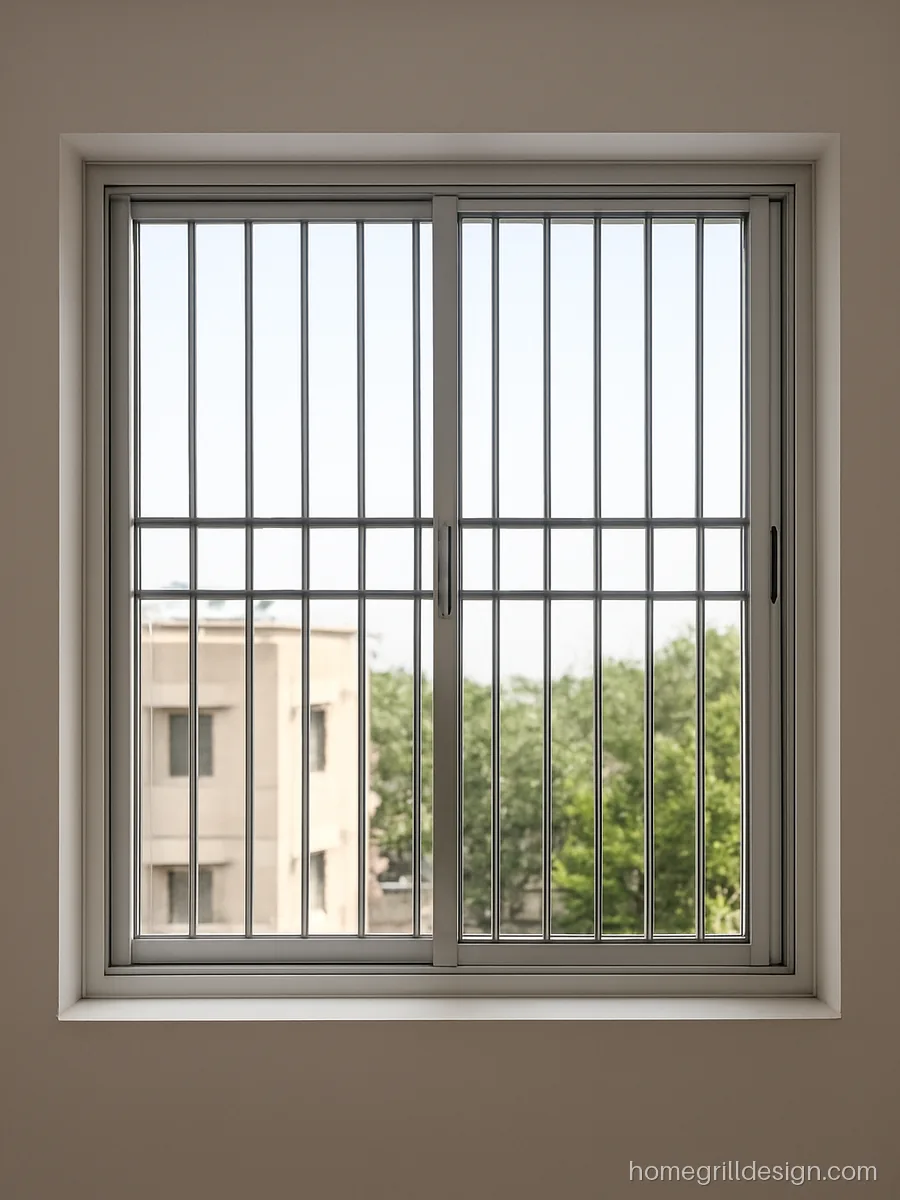
A sliding grill runs on its own track, so you can clear the whole opening for cleaning. Aluminium keeps it light enough to push.
- MaterialAluminium section
- StyleSliding grill panel
- SuitsWide upper floor windows
Fabricator’s tip Fit stoppers at both ends of the track and a lock that bolts into the frame.
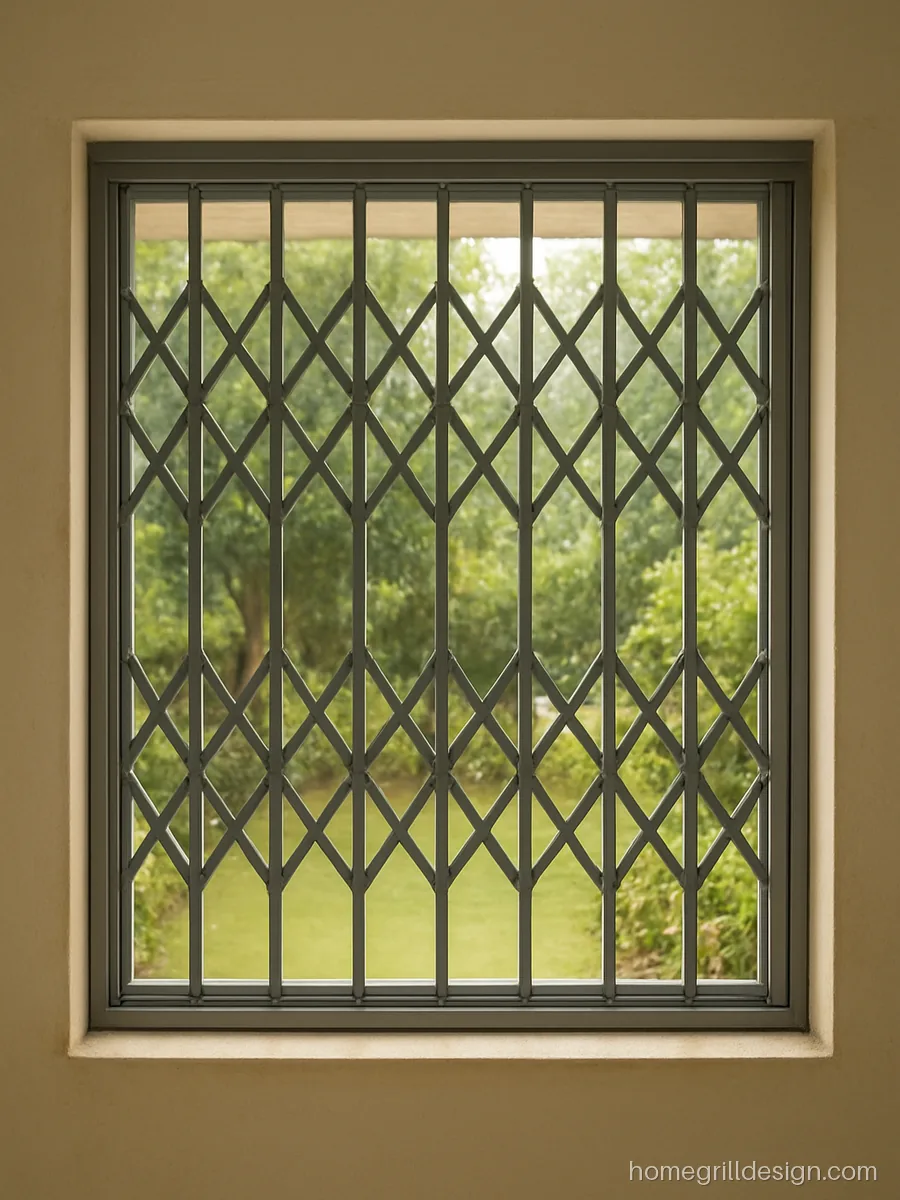
A collapsible grill folds to one side like a concertina. It suits wide openings you want fully clear during the day.
- MaterialMS channel and flat
- StyleCollapsible folding
- SuitsWide openings
Fabricator’s tip Oil the top and bottom channels every month. Dust in the track is the main reason they jam.
Grill Materials Side by Side
Seeing the actual bars helps you choose. These samples show the common sections and metals that go into home grills.
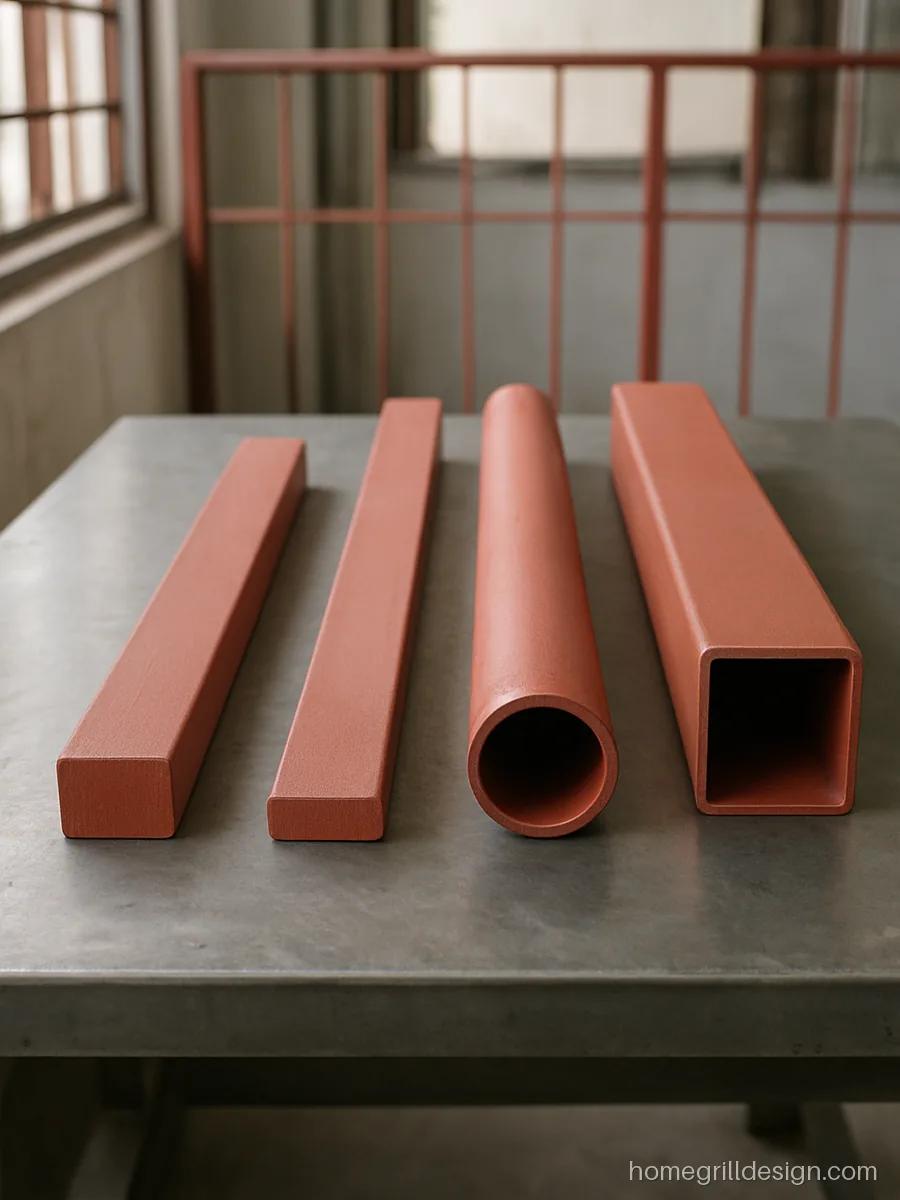
From left: 12 mm square bar, 25 x 5 mm flat, 3/4 inch pipe and 1 inch square tube. These four sections make most home grills.
- MaterialMS sections
- StyleSection samples
- SuitsPlanning stage
Fabricator’s tip Ask to see the actual bar before work starts. Swapping in lighter sections is a common shortcut.
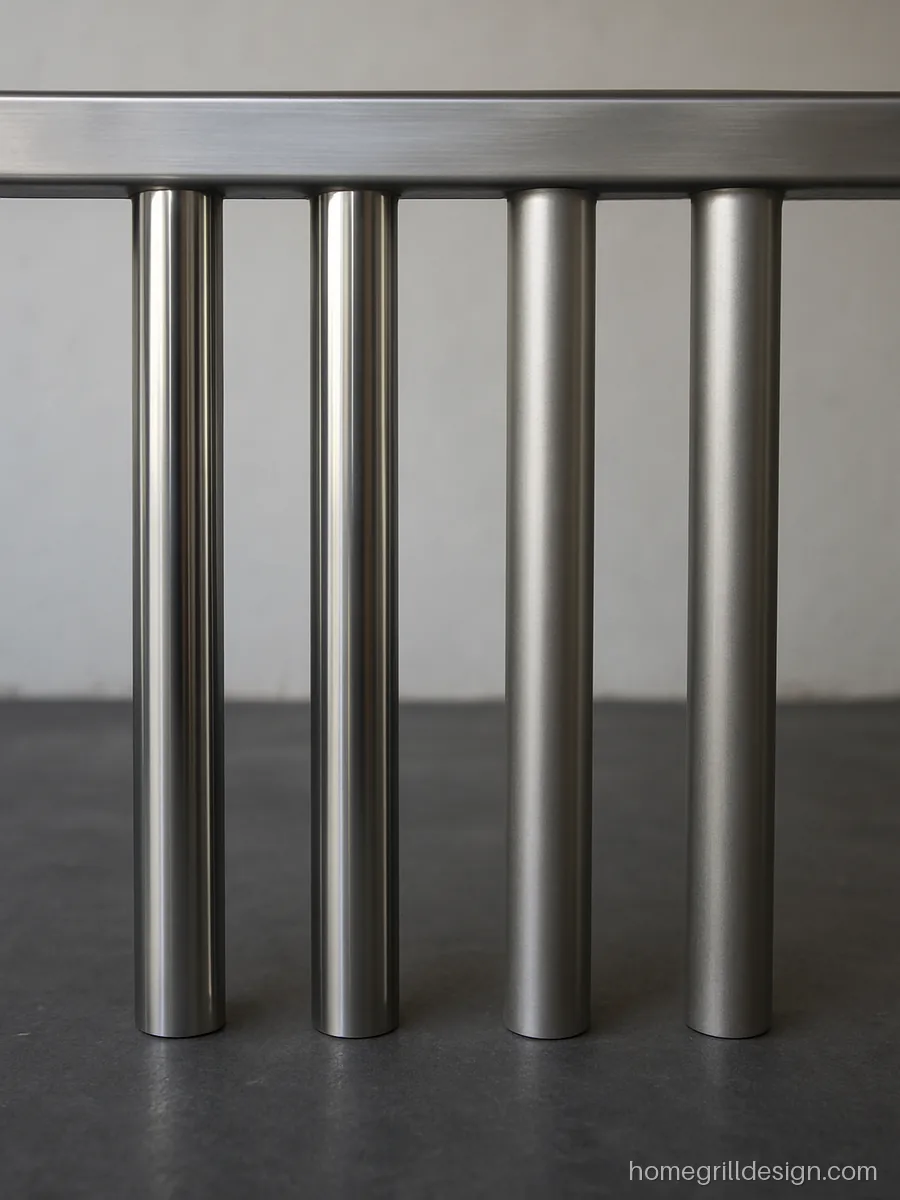
SS 304 and 202 look alike when new. The difference shows after a year near the sea, when 202 may get brown spots.
- MaterialSS 304 and 202 pipe
- StyleMirror and satin
- SuitsCoastal decisions
Fabricator’s tip Ask for the grade on the bill. A magnet test alone does not prove the grade.

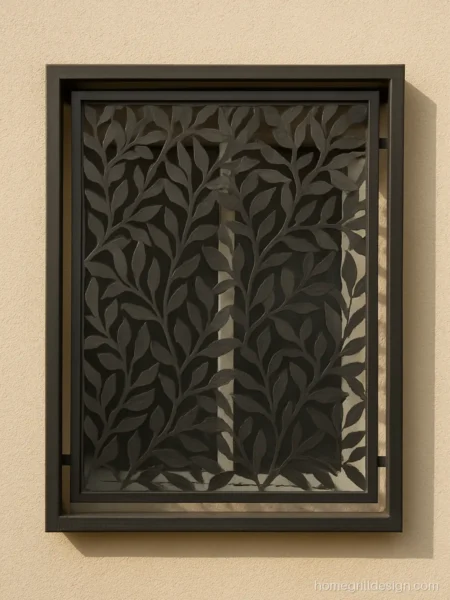
Aluminium is light, GI is zinc coated and wrought iron style pieces are heavy with scrolls. Each suits a different spot in the house.
- MaterialAl, GI, wrought iron
- StyleMaterial samples
- SuitsMaterial choice
Fabricator’s tip Wrought iron style pieces need repainting every two years, so plan ladder access before fixing them high.
Spacing, Joints and Rust Close Up
Small details decide whether a grill is safe and how long it lasts. Check these three things before you pay the final bill.
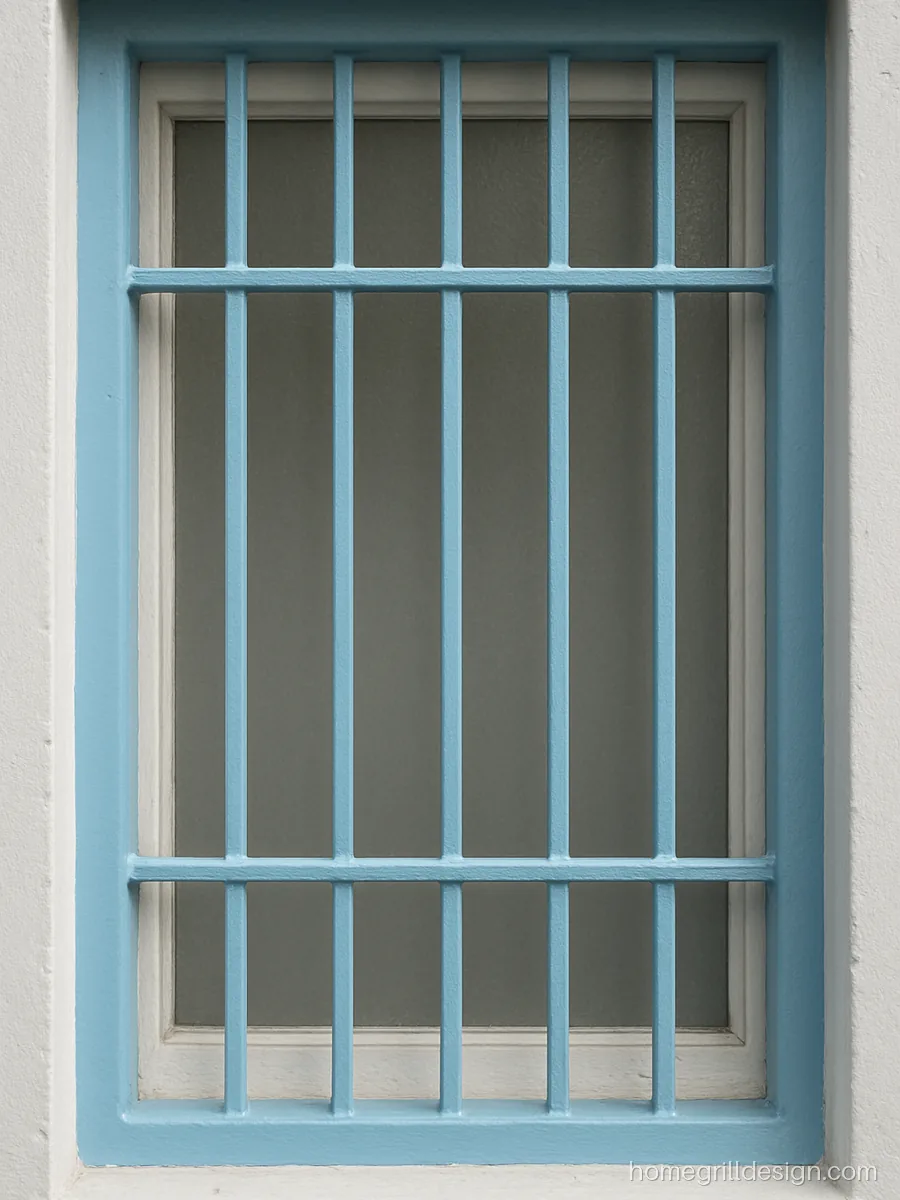
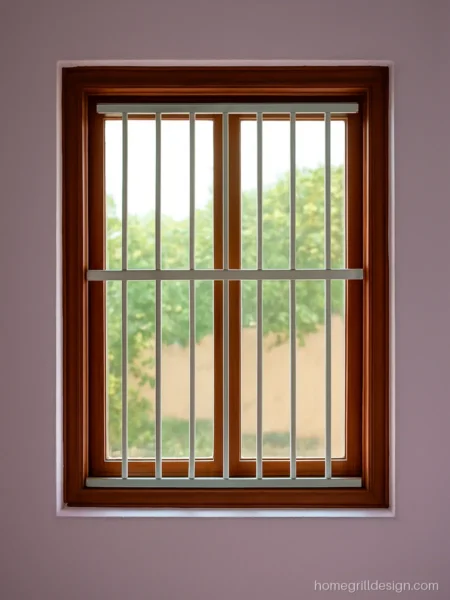
A clear gap of 100 mm stops a small child's head from passing through. Wider gaps look airy but are not safe in a family home.
- MaterialMS 12 mm square bar
- Style100 mm clear gap
- SuitsHomes with children
Fabricator’s tip Measure the clear space between bars, not centre to centre, when you check the work.
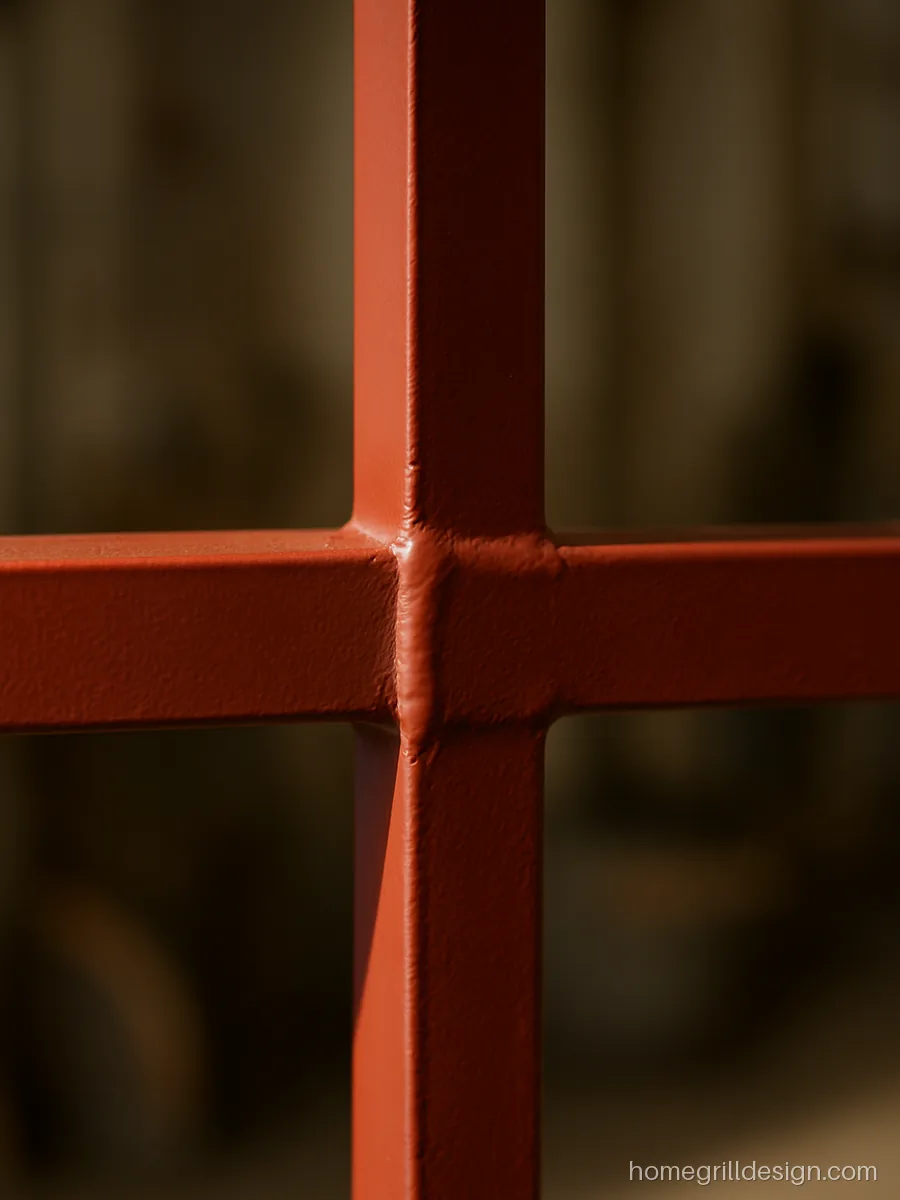
A good joint is ground flat and primed the same day. Rough slag left under the paint is where rust begins.
- MaterialMS 12 mm square bar
- StyleGround weld joint
- SuitsQuality check
Fabricator’s tip Inspect joints before the colour coat goes on, because paint hides poor welding.

Rust starts where the bar enters the wall, since water sits there. Seal this joint with exterior sealant after painting.
- MaterialMS 12 mm square bar
- StyleRust at wall joint
- SuitsCare and repair
Fabricator’s tip Scrape to bare metal, apply zinc primer, then two top coats, and fill the wall gap with sealant.
Different Types of Window Grills Compared
Here is a quick look at the main types of window grill design and where each one fits best.
| Type | How it works | Best for | Watch out for |
|---|---|---|---|
| Fixed | Welded to holdfasts, never opens | Ground floor, security | No fire exit |
| Openable | Hinged shutter with lock | Flat bedrooms | Weak hinges sag |
| Box | Projects out from the wall | Flats, plants, AC units | Needs brackets if deep |
| Sliding | Runs on a track | Wide upper floor windows | Track needs cleaning |
| Collapsible | Folds to one side | Wide openings | Channels jam with dust |
You can also mix types. A common layout is a fixed grill with one openable section in the middle. For styles, see modern grill design and simple grill design.
Best Material for Window Grill
| Material | Strength | Rust | Paint | Where it suits |
|---|---|---|---|---|
| MS (mild steel) | High | Rusts if bare | Primer plus enamel or PU | Most homes, ground floor |
| SS 304 | High | Very good, even near sea | None | Coastal and humid towns |
| SS 202 | High | Can spot rust near sea | None | Inland, dry areas |
| Aluminium | Lower | Does not rust | Powder coat or anodised | Upper floors, sliding grills |
| GI | Medium | Good, zinc coated | Optional | Pipes, budget grills |
| Wrought iron style | High | Rusts if neglected | Regular repaint | Traditional homes |
MS is the best all round choice for most families because it is strong and any welder can work it. Choose SS 304 if you live near the coast and do not want to repaint. In some countries stainless railing is called RVS railing; it is the same SS material. What raises the cost of any grill is the weight of metal, the steel grade, laser cutting, the number of joints and powder coating.
Bar Sizes, Window Grill Spacing and Railing Heights
- Square bar: 10 to 16 mm. Use 12 mm or more on the ground floor.
- Flat strip: 20 x 3 mm for small inner patterns, up to 40 x 6 mm for frames.
- Pipe or square tube: 3/4 to 1.5 inch for railings and box grills.
- Spacing: keep the clear gap at 100 mm (about 4 inches) or less wherever children live.
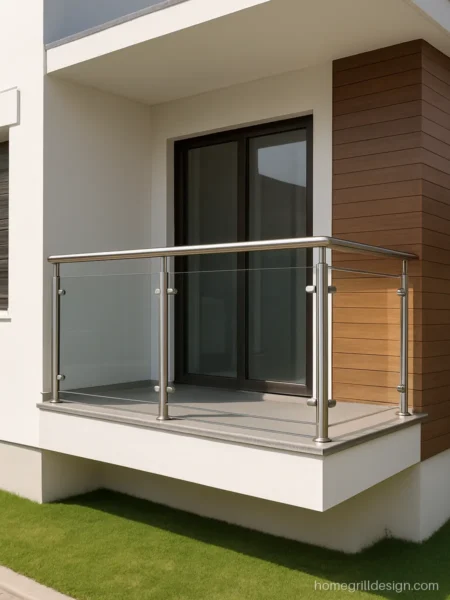
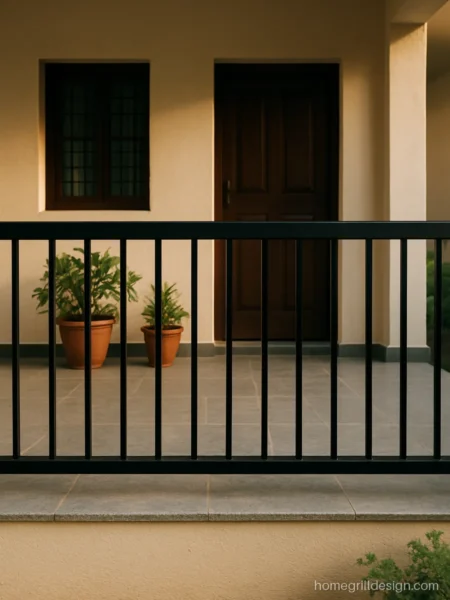
- Balcony and terrace railings: about 1 metre from the finished floor, with no horizontal bars a child can climb.
- Stair railings: about 900 mm high, measured from the front edge of each step.
These are common practice. Check your local building rules, as many cities set their own minimums. For balcony layouts, see our balcony railing design ideas.
How to install balcony railing: mark posts every 1.2 to 1.5 metres, drill and fix base plates with anchor bolts or set posts into the slab before tiling, weld the top rail and infill, then grind and prime the joints. Seal the base plates so water does not collect under them.
How to Measure a Window and Plan It Before Building
Measure the opening at the top, middle and bottom, both width and height, and use the smallest figure. Note whether the grill goes outside the frame, inside it, or projects out as a box. Write down which way the shutters open, since outward shutters need a box grill or a gap.
If you are still deciding how to design windows for a house, think about grills at the same time. Here are a few rules on how to place windows in a house so grills work well:
- Keep sill heights the same in each room so one grill pattern fits all windows.
- Leave 100 to 150 mm of solid wall around each opening for holdfasts.
- Add a small sunshade (chajja) with a drip edge above each window so rain does not stain the grill.
- Plan at least one openable grill in every bedroom.
When you plan how to design your balcony, decide the railing height, the floor slope for drainage and where pots will sit before the railing is ordered. The balcony design page has full layouts.
Grill Rust, Paint Care and How to Cover a Grill
Grill rust almost always starts in three places: at the wall joint, at weld points and on the top face of horizontal bars where water sits. Check these spots every monsoon. Scrape loose rust, prime with red oxide (or zinc chromate on the coast) and finish with two top coats of enamel or PU. MS grills usually need a full repaint every two to three years, sooner near the sea.
People often ask why wooden window bars rust. The wood does not rust, but the steel screws, straps and hinges on them do. Use SS screws and paint every metal fitting.
How to cover balcony grill openings: for pigeons, fit a stainless or nylon net on a frame behind the grill. For privacy, use perforated sheet or a fixed bamboo blind tied to the inside. For sun, a shade net on hooks works well and comes off for cleaning. Never block the openable section that serves as a fire exit.
How to Make Window Grills: Briefing Your Fabricator
- Show a photo of the design and agree the bar size in writing.
- Give exact measurements and say whether the grill sits inside or outside the frame.
- Agree the clear gap between bars and mark the openable section.
- Ask for holdfasts set into masonry, or anchor bolts on finished walls.
- Ask for welds ground smooth and primer applied the same day.
- Fix mosquito mesh frames and locks before the final paint coat.
- Inspect the work before painting, then again after fitting.
For colour choices after fitting, see the grill colour combination guide.
Grill design questions
What is a window grille?
A window grille is a frame of metal bars or a cut panel fixed over a window for safety. In India it usually sits outside the glass and is fixed into the wall with holdfasts. Some grilles are fixed, and some open with a lock.
Which are the different types of window grills?
The main types are fixed, openable, box, sliding and collapsible. Fixed grills are the strongest, openable grills give a fire exit, box grills add a ledge, and sliding or collapsible grills clear the opening fully.
What is the best material for window grill near the sea?
SS 304 is the best choice near the sea because it resists salty air. Aluminium is also good on upper floors. MS can work if you use zinc primer and repaint every year or two.
What is the right window grill spacing?
Keep the clear gap between bars at 100 mm or less in any home with small children. Measure the space between bars, not from centre to centre. Patterns with large open shapes should follow the same rule.
How to cover balcony grill to keep pigeons out?
Fix a stainless steel or nylon bird net on a light frame behind the grill. Tie it tight so birds cannot push through at the edges. Leave the openable section free so it can still be used in an emergency.
How to design balcony grills and railings for safety?
Keep the railing about 1 metre high from the finished floor and use vertical bars with gaps of 100 mm or less. Avoid horizontal rails that work like a ladder. Fix posts firmly into the slab or with anchor bolts.